Thursday, November 30, 2017

How to Teach Native American Tribes!


Muscogee by Cierra, Aimee, and Angelina


  • The great seal is a trademark of their tribe (plow and they aer diffing their crops)
  • They were known as the Creek Indians
  • Believed to have been created to guard against other larger Indian tribes of the region
  • One of the 5 Civilized Tribes
  • Located in the South and had a warm climate
  • Canyons, high plains, and mountains
  • Nomadic tribe because they moved a lot
  • Religion: Protestant
  • Creek men hunted deer, wild turkeys
  • The homes of the Muskogee- Mound Grass Houses, Wattle and daub houses, and Creeks building American-style log cabins
  • Famous people: Lt. Col. Ernest Childers, Acee Blue Eagle, William McIntosh and John Harjo

3 Pluses

  1. I loved the images that you used on your slides, it made the presentation aesthetic!
  2. You definitely had all of the information about the tribe to pull together the topic all together
  3. I loved that you included the Creek Stomp Dance and the native tribe Song
1 Wish
  1. I wish that for the interactive activity you would have made us get up and out of our chairs and do the Creek Stomp Dance around a fake fire. I feel like that would have been a perfect way to pull the lesson together!

Navajo Tribe by Marie, Ganny, Alexis, and Mikaeyla

  • One of the largest tribes in the United States
  • Second largest Native American Tribe
  • Known as the Dine tribe- comes from the word "the people"
  • "The children of the holy people"
  • Earth mother= Important and sacred God
  • Navajos believed in gods that they called Holy People, they believed it was curcial to praise they would use heir powers against them
  • They worshipped the sun, winds, and watercourses
  • They are cautious about death-they try not to talk bout it because they feel like it will happen to them
  • Located throughout Northeast Arizona, New Mexico and Utah
  • Region- Southwest Region of the US
  • Movement- The Indians are known to have inhabited the US since before Columbus
  • Culture: Geared towards family life and events

3 Pluses
  1. I loved that you incorporated the parts of geography! It tied this entire lesson together so great job!
  2. I loved the images and videos that you used. I feel like this was a very well thought out presentation and it was visually captivating!
  3. All of the teachers used their teacher voices and were very knowledgeable about the topics! This was a great presentation.
1 Wish
  1. I wish that you had us (the students) pick out the food from the Food bag and guess what the Dines used to eat based off of the images.


Tuesday, November 28, 2017

NAT Project Jigsaw Tlingit Info & Reflection


Jigsaw Project 
NAT Project

5 Themes of Geography


Movement
Region
Human
Environment
Location

Place

    Tlingit Tribe 

How do you pronounce the word "Tlingit"? What does it mean?Tlingit is pronounced "TLIN-git" or "KLIN-kit." This is an English pronunciation of their native word Lingit, which means "people." In their own language, the first sound is a 'breathy l' that does not exist in English. 

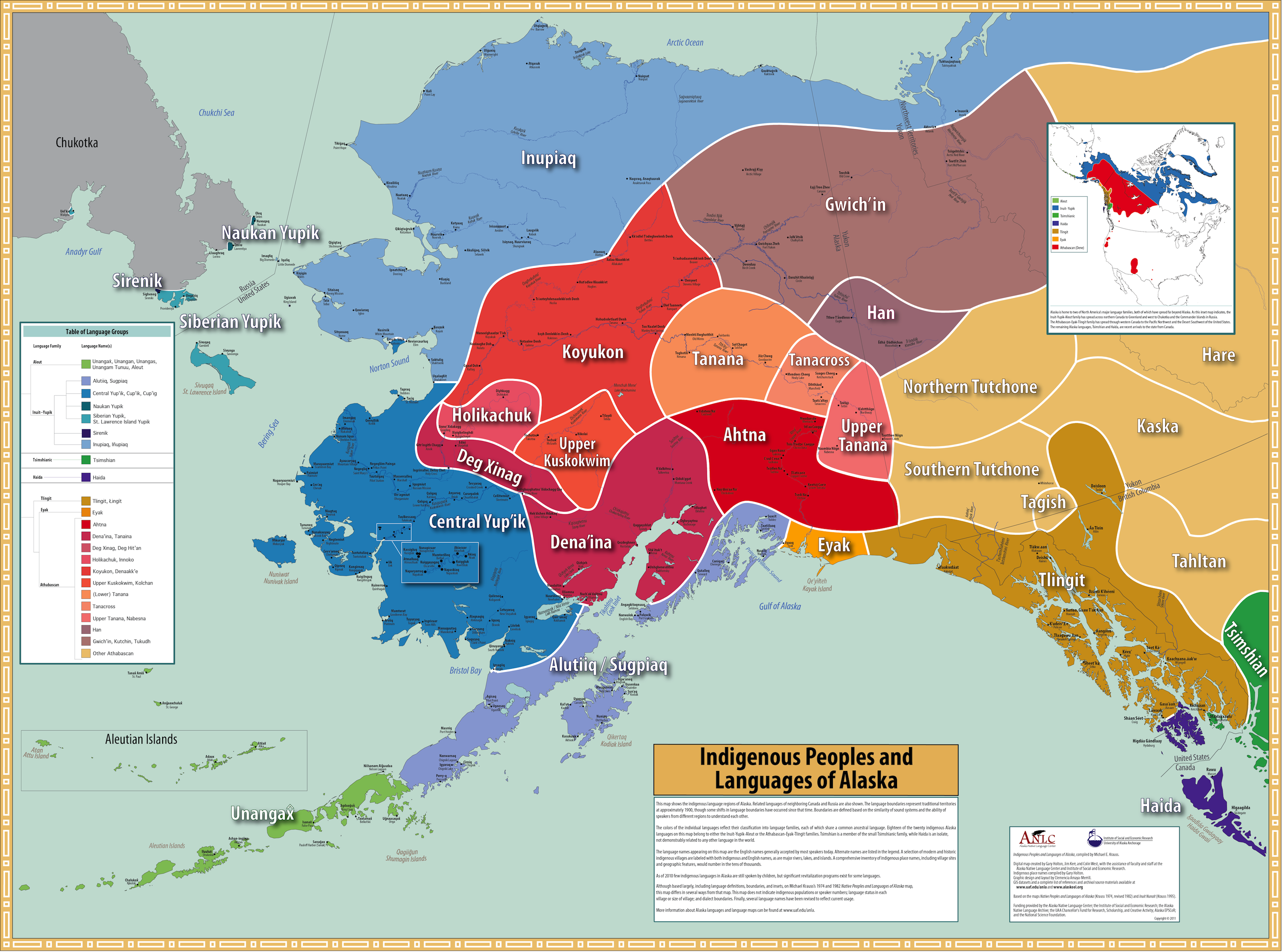
Where do the Tlingits live?The Tlingit Indians are original people of the Pacific Northwest Coast. They live in southeastern Alaska and in British Columbia and the Yukon in Canada. Here is a map showing the location of traditional Tlingit lands. 

How is the Tlingit Indian nation organized?In Canada, each Tlingit community has its own reserve, or reservation. Reserves are land that belongs to a Native American tribe and is legally under their control. Each Tlingit tribe--known as a band or First Nation in Canada--is politically independent and has its own leadership. The two Tlingit First Nations each have their own government, laws, police, and services, just like small countries. However, the Tlingits are also Canadian citizens and must obey Canadian law. 

Tlingits in the United States do not have reservations. Like most Alaska Natives, they live in Native villages instead. Alaska Native villages do not have the same sovereignty rights that Indian nations in other US states do, but the Tlingits belong to a coalition called the Central Council of the Tlingit and Haida Indian Tribes of Alaska which handles tribal government on behalf of several Native villages. Individual Tlingit villages also have local councils that have economic control over their village resources. 

What language do the Tlingit Indians speak?Almost all Tlingit people speak English today, but some Tlingits, especially elders, also speak their native Tlingit language. Tlingit is a complicated language with many sounds that don't exist in English. If you'd like to know an easy Tlingit word, "gunalchéesh" (sounds like gu-nall-chaish) means "thank you" in Tlingit. You can also read a Tlingit picture dictionary here

Today Tlingit is an endangered language because most children aren't learning it anymore. However, some Tlingit people are working to keep their language alive. 

What was Tlingit culture like in the past? What is it like now?Here's a link to the homepage of the Taku River Tlingit First Nation in Canada.
There you can find information about the Tlingit tribe in the past and today. 


How do Tlingit Indian children live, and what did they do in the past?They do the same things any children do--play with each other, go to school and help around the house. Many Tlingit children like to go hunting and fishing with their fathers. In the past, Indian kids had more chores and less time to play, just like early colonial children. But they did have dolls, toys and games to play. Like many Native Americans, Tlingit mothers traditionally carried their babies in cradleboards on their backs--a custom which many American parents have adopted now. 

What were men and women's roles in the Tlingit tribe?Tlingit women gathered plants and herbs and did most of the child care and cooking. Men were fishermen and hunters and sometimes went to war to protect their families. Both genders took part in storytelling, artwork and music, and traditional medicine. The Tlingit chief was always a man, but the clan leaders could be either men or women. 

What were Tlingit homes like in the past?The Tlingits lived in rectangular cedar-plank houses with bark roofs. Usually these houses were large (up to 100 feet long) and each one housed several familes from the same clan (as many as 50 people.) Here are some pictures of Native American homes like the ones Tlingit Indians used. Today, old-fashioned buildings like these are still made from cedar wood, but they are only used for ceremonial purposes. Tlingit people live in modern houses and apartment buildings, just like you. 

What was Tlingit clothing like? Did they wear feather headdresses and face paint?Tlingit men usually wore only breech cloths and the women only short skirts made of shredded bark. Further inland, where the weather was colder, women wore longer deerskin dresses and men wore Athabaskan-style pants withmoccasins attached. Even in the snow, most Tlingit women preferred to go barefoot, but men on winter hunting trips would often wear snowshoes. For formal occasions, Tlingit people wore more elaborate outfits, with tunics, leggings and cloaks painted with tribal designs. One special clothing item of the Tlingits was the spectacular Chilkat blankets, which were woven from cedar bark and mountain goat hair. Here is a website on Tlingit Chilkat blankets, and some photos and links about Indian costume in general. 

The Tlingits didn't wear long headdresses like the Sioux. Instead, both men and women sometimes wore basketry hats made of finely woven spruce root. The designs and patterns of these hats often displayed a person's status and family connections. The Tlingits painted their faces with different colors and designs for different occasions, and often wore tribal tattoos. Tlingit women often wore their hair in two long braids, while men usually left theirs long and loose. Like other Northwestern Indians, Tlingit men often wore mustaches and beards. 

Today, some Tlingit people still have a traditional cloak or basket hat, but they wear modern clothes like jeans instead of breechcloths. 

What was Tlingit transportation like in the days before cars? Did they paddle canoes?Yes--the Tlingit Indian tribe was made dugout canoes by hollowing out spruce and cedar logs. The Tlingit tribe used these canoes to travel up and down the sea coast for trading, fishing and hunting, and warfare. Their most impressive war canoes, which could be more than sixty feet long and withstand ocean storms, were bought from the Haida tribe, who had access to the best cedar trees and were considered the best canoe-makers by the other Northwest Coast tribes. Here is a website with pictures of Northwest Indian canoes. Today, of course, Tlingit people also use cars... and non-native people also use canoes. 

What was Tlingit food like in the days before supermarkets?The Tlingit Indians were fishing people. Tlingit men caught fish and sea mammals from their canoes. They also hunted deer, mountain goats, and birds. Some Tlingit bands, who lived further inland, relied more on big game like caribou and moose. Tlingit women gathered shellfish, seaweed, berries, and roots. Here is a website with more information about Native American fishing. 

What were Tlingit weapons and tools like in the past?Tlingit fishermen used harpoons, bone fishhooks, and wooden fish traps. Hunters used bows and arrows or spears, and trappers used snares and nets. In war, Tlingit men fired their bows or fought with spears and war clubs. Some Tlingit warriors wore bulky armor made of wooden rods lashed together to protect themselves from enemy archers. Here is a website of pictures and information about Northwest Indian weapons

What are Tlingit arts and crafts like?Tlingit artists are known for their fine basket and carving arts, including totem poles, and for their exceptional Chilkat robes and other weavings. Here is a website about Tlingit artwork in general. 

What other Native Americans did the Tlingit tribe interact with?
The Tlingits traded regularly with all the other tribes of the Northwest Coast and the far north, particularly the Haida and Tsimshian tribes. Chiefs from other tribes especially desired Tlingit Chilkat blankets, which were famous for their great beauty, and the Tlingits liked to buy shells for jewelry and the masterful canoes of the Haidas. The Northwest Coast tribes also fought each other frequently, raiding each other's villages to steal wealth and capture slaves. 

What kinds of stories do the Tlingit Indians tell?There are lots of traditional Tlingit legends and fairy tales. Storytelling is very important to the Tlingit Indian culture. Here is one Tlingit legend about the origin of mosquitoes. Here's a website where you can read more about Tlingit mythology

What about Tlingit religion?Religions are too complicated and culturally sensitive to describe appropriately in only a few simple sentences, and we strongly want to avoid misleading anybody. You can visit this site to learn more about the Tlingit religion or this site about Native American religion in general. 

Can you recommend a good book for me to read?You may enjoy Children of the Midnight Sun, an excellent book about the lives of contemporary Alaska Native children. One of the eight children profiled is Tlingit. You may enjoy Heroes and Heroines, an interesting collection of Haida and Tlingit legends. Younger children may like The Frog Princess, a picture book of a traditional Tlingit legend. Meet Lydia is an illustrated biography of a modern Tlingit girl which makes a great introduction to Tlingit life today. If you want to know more about Tlingit culture and history, two good books are Tlingit People and The Tlingit Indians. You can also browse through our reading list of recommended American Indian books in general. 

How do I cite your website in my bibliography?You will need to ask your teacher for the format he or she wants you to use. The authors' names are Laura Redish and Orrin Lewis and the title of our site is Native Languages of the Americas. We are a nonprofit educational organization working to preserve and protect Native American languages and culture. You can learn more about our organization here. Our website was first created in 1998 and last updated in 2015. 

Reflection: I absolutely loved this project! I felt that my group did an excellent comprehensive job of bringing together information from every last corner in order to be as informative as possible about the Tlingit Tribe! We even added an interactive activity afterwards to have a coloring page that is representative of Tlingit art and their meaningful colors! I loved this presentation! :)

Thursday, November 16, 2017

Class Artifact Bag Links


Artifact Bag Presentations


New Spain Artifact Bag Presentations:


Latitude & Longitude Artifact Bag Presentations:


Christopher Columbus Artifact Bag Presentations:


Spanish Explorers Artifact Bag Presentations:


Tuesday, November 14, 2017

New Spain Artifact Bag Reflection


New Spain Artifact Bag Objects


  • Piece of Gold found in the New Land by Spanish Explorers
gold.jpg
  • Map of the journeys that the Spanish Explorers were going to take to New Spain to find gold
new spain map artifact.jpg
  • Scroll of the drawing/outline of a missionary
mission artifact.jpg

Artifact Bag Presentation Link


Reflection on Artifact Bag Project:

I personally loved this project! I felt that this project was such a creative and hands on way to learn to teach history by actually creating history through the artifacts. By creating the artifacts, I was able to draw connections between the unit of Life in New Spain and I made it possible to recreate the past through my mini lesson and presentation! It was so interesting and lovely to see my classmates enjoying the artifacts that I worked so hard to create as well as their inquisitive thought process to search for the answers to all of my questions! I was very happy to see how the presentation and lesson plan worked out and I am extremely excited to someday use this project in my future classroom to teach social studies!


Back into the classroom to learn more!


1st Inquiry Lesson Back in Class!

Opening message: Norman Rockwell created images and paintings to address the nation to protect the country. He created these images in the light to display the four freedoms: freedom of speech, freedom of religion, freedom of the pursuit of happiness/desire, and freedom of fear.


What does it mean to be a historian? What do historians do? Why is it important to have an experience of being a historian? :
The historian interprets the evidence, deciding on the degree of its importance and accuracy. This is done by applying logic and "best guesses      " to knowledge about the people and their times.

Historians
  • Examine written records to understand the past
  • Students should be able to: Think chronologically, understand historical events, analyze historical documents, conduct historical research
Task of Artifact Bag:

Think and make predictions-who is/are in the pictures; what country the artifacts are from;when, where the events might happen; who the person is etc. What else can you say about the person?

Observe:
  • What do you notice first?
  • Find something small but interesting,.
  • What do you notice that you didn't expect?
  • What do you notice that you can't explain?
  • What do you notice now that you didn't earlier?

Monday, November 13, 2017

Mystery Bag Findings!


Mystery Bag Activity

Item 1: Birch Tree Portrait

birch tree portrait.jpg

  • When/ where? Created in 2004 in Russia
  • What? The birch tree is a symbol of Russia. “Birch” is ancient and connects to the word “keep” or “care”. It was believed that the birch tree could protect people against spirits.
  • Why? This was a present given to Dr. Smirnova to remember her mother land and native place.
  • Conclusion: The birch tree is a beautiful symbol of Russia!


Item 2: Khohloma Russian Wooden Decorative Spoon

  • When/where? Created in the 17th century in Russia
  • What?  This is a wooden spoon that gives off a metal look. Khokloma artists applied free-hand brush paintings. This spoon is used in creation of splendid ornate wooden tableware.
  •  Why? This spoon is a decorative piece of art where the colors are representative of (red-warmth & softness, black-brilliance, no sharp lines, disperses the light)
  • Conclusion: This spoon is a beautiful representation of Russian art!

Item 3: Russian Diploma 

russian diploma.jpg


  • When/where? This Russian Diploma was granted to Dr. Smirnova on May 4, 1989 in Russia.
  • What? This diploma is a diploma of the candidate of Pedagogical Sciences.
  • Why? This was rewarded to Dr. Smirnova in 1989 from the Cabinet of the Ministry of Education to award her her very own PHD of Pedagogical Sciences.
  • Conclusion: This certificate/diploma is a representation of what a PHD is like from Russia where education is just as important as it is in the USA.

Here you can find our class PowerPoint and all of my classmates's Mystery Bag Class Findings!

My Reflection on Findings: 
I absolutely loved this activity because it inspired myself and my group mates to collect data and information on a country that we would not have otherwise discovered or explored! This was an excellent activity that sparked interest and also sparked curiosity in us as students. I would LOVE to use this activity in the near future for my students in order to allow them to put their heads together to discover deeper meanings in Social Studies!

Wednesday, November 8, 2017

Teaching History through Inquiry-Chap 12


Teaching History through Inquiry!

Now that we have learned much about the actual world of teaching full class social studies, it is time to go back to the basics and sit in the seats of the students! Cheers to the journey to learn about more resources that might help us in being the best possible teachers we can be!

Chapter 12 Reading Notes:
WHY HISTORY??
  • History helps us understand people and societies
  • History helps us understand change and how the society we live in came to be.
  • History contributes to moral understanding.
  • Studying history is essential for good citizenship.
  • History is useful in the world of work.
  • Studying history provides opportunities for critical thinking.
  • History helps to provide a real grasp of how the world works.

“Knowledge of U. S. history enables us to understand our nation’s traditions, its conflicts, and its central ideas, values, and organizing principles.”

WHAT should students be able to do?
  • Basic level (interpret a map about the colonial economy, identify a result of Native American-European interaction, understand the context of a women's movement document)
  • Proficient level (understand that canals increased trade among states, identify a domestic impact of war, understand Missouri statehood in the context of sectionalism)
  • Advanced level (Explain how machines and factories changed work, explain two differences between plantations and small farms in antebellum South, evaluate Civil war arguments)
UNDERSTANDING the basics of History
  • Make the past meaningful by creating patterns that give shape to “just a bunch of facts”
  • Recognize that good history is based on evidence and several perspectives
  • Analyze the relationships between the past, the present, and the future
  • Understand the relationships of time, continuity, and change
  • Tell the difference between what is real and what is fantasy
  • Use critical thinking to judge the value of historical evidence
  • Decide what information is important to have
  • Be skeptical enough to look for more than one account of an event or life
  • Be aware that our vision and thinking are often limited by our biases and options
MAKE HISTORY MEANINGFUL
  • Use original sources and literature to teach history
  • In-depth study of a few important events gives student the opportunity to understand many sides of a story
  • Hands-on experiences
  • Study of multiple perspectives
  • Encourage students to ask questions, collect evidence, and analyze the importance of historical people and events
CHALLENGES IN TEACHING HISTORY
  • Time
  • Inaccuracies and omissions in history
  • Varying developmental levels of students
BUILDING INTEREST & INVOLVEMENT

EThe teacher encourages students to share personal Experiences related to the topic. Common experiences that could be related to Columbus’ voyage, for example, might be:
having been losthaving been bored on a long trip
having to share space that is too smallexploring a new place
PThe teacher encourages discussion of Perceptions that students have from the experience such as feelings they had, details they remember.
IThe teacher shares Information about the topic to be studied.
CThe teacher helps the students make Connections between the students’ experiences and perceptions and the topic being studied.
*Ask questions: Experience Questions, Perception Questions, Information Questions, Connection Questions*

Teaching Local History
  • cornerstones and information plaques in the school and neighborhood can provide information and chronology about historic people and events
  • family members can share stories and photographs about the students when they were younger
  • family members and other members of the community can serve as resources about the history and customs of people in the community


*Community-based instruction- field trips to connect social studies lessons to the content/world around them
*Graphic organizers
*Teaching generalizations
*Visual Strategies
*Artifacts- students can discover real life objects all over again to connect the past and the present
*Problem solving
*Inquiry teaching
*Reciprocal Teaching (dialogue between teacher and students)
*Cooperative Learning (round robin, think pair share, inside outside circle)
*Brainstorming
*Cognitive mapping
*Role play and simulations
*Body sculpting- using your body as figurines to form and remember ideas
*Jigsaw methods
*Timeline creations/projects
*Hands-on activity strategy-for learners with abstract ideas (artifact bags, postcards, letters)
*Teaching the students about local history (interview members of the community or family members)
*What am I activity? (receive a vocab word and have to connect that to different facts)
*Students ask questions to be more inquisitive about their own topics
*Mysteries and history- give opportunities for the students to do their own investigations


Thursday, November 2, 2017

A Thank You to my first 5th Grade Class!


Dear Fifth Graders,

I know this may never been seen by you, and I also know that it's coming from someone who has only known you for about half of a semester, but I want to thank you for the experiences that you have given me, and for the lessons that YOU have all taught me. Often times it is the teacher who inspires the student, and although I do feel like I have done that, I feel like you have indirectly inspired me more than you will ever begin to know. As fifth graders, you were my first full class that I taught over the age of preschool, and you were also the first social studies class that I have taught. Through this experience, I have grown as a future educator and even a student myself. I learned that although teaching has been and always will be a large amount of work when it comes to preparation and planning, teaching you all has reminded me of why I decided to teach in the first place. Seeing you all reach your "aha" moments or even just greet me as you walked in the classroom or have a smile on your face when I was ready to begin was more than I could ever ask for. The smile on my face in this picture is an understatement of how much I enjoy teaching and from being in first grade and having that goal up until now, it is evident that experiences such as teaching your classroom will only bring me closer to achieving my goal that is oh so attainable and desired. So to my first fifth grade class, thank you. Thank you for inspiring me, for cherishing me, for respecting me, and for making this teaching experience just another step in the direction to my own classroom someday.

Love always,

Miss Amanda