Thursday, September 21, 2017

Fieldwork Discussion on 9/21/17


Fieldwork Discussion:
  • Looked at online textbook (more resources can be found in the curriculum library)
  • Always have to open up with pre and post questions for the lesson
  • GROUP #1: Maps & Timelines
  • Create learning materials, and a story about the topic to keep them engaged
  • Create a travel map
  • Objective should be brief not extensive. This is determined by the end of the lesson. You WRITE it in the beginning, but you accomplish it by the END of the lesson.
  • Independent practice: The students are showing what they have learned by themselves! You cannot help them with this assessment. What are they to do by the end of the lesson and how will you assess this?
  • Student: Lists, matches, describes, recites, explores, inserts, etc.
  • Example of objective: Given a blank map the student will trace the routes of Columbus to discover America properly while pointing out 5 different important points. 
  • Goal: What you want the students to accomplish by the end of the UNIT
  • Objective: What you want the students to accomplish by the end of the LESSON
  • Types of lesson plan formats can be found in your google docs (Reminder: You also printed them out!)
  • Inquiry Lesson- Reflections, or write a letter, what they learned to the 3rd graders etc.
  • Direct Instruction requires: Explanation, description & modeling
  • Demonstration vs. modeling: Modeling happens in the head, demonstration happens physically

Important Fieldwork Dates:
  • *1st lesson: Direct Instruction on October 4th*- Exit tickets used in this lesson type
  • *Getting to know you activity/ Meeting the students: September 28th*

PIGS Jigsaw Cooperative Learning Presentations


Jigsaw Expert Presentation Notes:

Positive Interdependence

Individual Accountability
Group Processing

Social Skills
GROUP PROCESSING: Angie
  • Group processing: Group members analyze their own and the group’s ability to work together.
  • Purposes of group processing: Allow the group to improve its work together continuously over time, focus attention on group members’ contributions in order to increase individual accountability, make the learning process simpler through streamlining, reduces or eliminates actions that don’t contribute positively to the group’s learning, and group members analyze their own and the group’s ability to work together
  • When does group processing takes place during a cooperative lesson? Mostly in the closure of a lesson
  • Foundations for group processing:
*Feedback: Each student in the group gives & receives positive feedback on their contribution to the group. Make sure the feedback is positive this way it generates positivity towards improving performance.
*Reflection: Students are able to analyze and reflect on the feedback their group has given.
*Improvement Goals: Each student will set goals for themselves
*Celebration: Celebrating and getting excited for accomplishments
  • Video: Example of group processing in a live lesson and the importance of giving feedback in the closure (3 pluses & a wish)
  • Showed examples of forms for children to give one another feedbacks
SOCIAL SKILLS: Olivia
  • Forming skills: Taking turns, using quiet voices
  • Functioning skills: Skills needed to manage the group's activities to complete a task
  • Formulating skills
  1. Make sure students understand the need for the teamwork skill
  2. Make sure students understand what the cooperative learning skill is, how and when to use it
  3. Set up practice situations & encourage skill mastery
  4. Give students feedback on their use of the skill
Stages of Skill Development
  1. Awkward 
  2. Phony (when students use the skill but feel inauthentic 
  3. Mechanical
  4. Integrated
Checking for understanding: eye contact, leaning forward, interested, expression, open gestures & postures, can you show me? Give us some examples please?

Contributing Ideas
Outcome of social skills:
  1. Personal development & identity
  2. Enhance "employability, productivity, & career success"
  3. quality of life
Face-to-face promotive interactions: Students promote each other's success by sharing resources. Students are helping, supporting & engaged. The student can orally explain how to solve a problem and students can help each other connect present & past learning.

COOPERATIVE LEARNING LESSON PLAN: Alexus
  • Example of difference between direct instruction and cooperative learning
  • Direct Instruction: The content is the main goal, centered, one academic goal, lower level thinking
  • Cooperative learning: The content AND working together is the goal, group work, critical thinking skills, one academic goal and one social skill goal, no guided practice
  • When distributing materials, you should only give one set of materials per group
  • Doing this enforces working together through positive interdependence
  • Closure of the lesson: Direct Instruction- Recap the main concepts of the lesson and check for understanding, teacher-centered
  • Cooperative learning closure: students present their work
Jigsaw Steps:
  • Get with your base groups
  • Every member gets a piece of the puzzle/information (topic or job)
  • Students group off into expert groups and get ready
  • Back to your base groups
  • Teach your group your lesson
  • Assessment to hold everyone accountable for their piece of the work
Reflection on Jigsaw Teaching Methods:
  • Text should be 24-30 size for presentations
  • Make animations of the lines so that they do not see all of the text on the slide right away
  • Mute parts of the video to ask what is happening in each scene. This is a pre & post assessment: perfect evidence of student's learning

Tuesday, September 12, 2017

Introduction Lecture about Social Studies


Introduction Lesson on Social Studies

Homework due on Wednesday, 9/14 :Read Learning to Implement Social Interactive Model of teaching

Class Notes:

Origins of Social Studies:

  • History has dominated the discipline
  • Lectures & discussions are primary teaching devices
    • Occasional audio visual aids & field trips
  • HW assigned from textbooks
  • Elementary
    • Small group & independent work
    • Manipulatives, films, TV, Computers
    • Integrated approaches
Social studies: A body of integrative knowledge, concepts, skills, generalizations & theories in the SS fields (history, economics, geography, citizenship, etc.)

Social Studies Powerful Elements: 5 Principles of Effective Teaching
  • Meaningful: Engaging, connects students with real-world situations
  • Integrative: Draws on more than one discipline, subject or skill set
  • Value-Based: Strengthens students' sense of democratic values & social responsibility
  • Challenging: Incorporates different perspectives & draws on students' critical-thinking skills
  • Active: Participatory, makes use of manipulatives or physical environment
How do people learn? What is learning?

Percentage of what we learn is retained in memory:
  • When we read: 10%\
  • When we see: 30%
  • When they see & hear: 20%
  • When we discuss: 50%
  • When they DO things: 95%
  • When they teach others: 90%
Structure of Knowledge (Jerome Bruner)

Image result for triangle

Meta-cognition: Being able to explain your thinking or problem solving. This is thinking about your thinking. It is the highest level of knowledge. 

Generalizations: (Creating principles/ theories)


Concepts


Facts: Memorization


Educational Philosophies 
Image result for triangle

Re-construction: Understanding about today's world/ cultural issues/ based on current events (social- cognitive)


Existentialism: Focus on the emotions & personality of the whole child (learning styles, MI, brain)


Progressivism: Students learning through DOING/ building meaning themselves (constructivist/cognitive)


Perennialism/Essentialism: Students learning about the world through the best classic books
                                                                                    (Behaviorist theory)


Models, Strategies, & Methods

MODELS (philosophical approaches):

Personal: Helping students w/ their self identity, self esteem, & giving students individual projects to find themselves & their uniqueness
Social Interactive: Aiding the students in interacting w/ the content & each other
Information Processing: Equipping students to find info, process it, explain it, or reflect on it. This can be done through inquiry, problem-solving etc.
Behavioral: To change students behavior (stimulus-> response)

STRATEGIES:

INDIRECT/ Individual: Showing individuality through their own projects, student-centered
INDIRECT/ Interactive: Interacting & learning through others, student-centered
INDIRECT/ Cognitive: Learning through explaining & exploring, student-centered
DIRECT: Strategy, teacher-centered

METHODS (Literal ways to reach the goals):

INDIRECT/ Individual: Projects
INDIRECT/ Interactive: Discussion, role play, jigsaw
INDIRECT/ Cognitive: Graphic organizers
DIRECT: Demonstration, Guided Practice, Lecture, Lower order questions (yes/or no convergent questions/factual questions), Homework assignments, exercises from the textbook (TASK= Reach mastery)

Learning-Planning-Teaching

Creative Thinking Evaluation/ Synthesis
Analysis
Application/ Comprehension
Knowledge

Instruction 

Personal/Independent Study/ Experiential
Social-Interactive
Information-processing/ Indirect-Cognitive
Behavioral/Direct 

Assessment

Summative/Authentic Projects, E-folios, self-evaluation, journals
Peer review, group processing
Formative/ Graphic organizers, research papers

Goal: A general statement/ bigger picture/bigger idea of what students want to achieve by the end of the plan. This is something general written for an extended period of time.

What are Building Blocks/ Components of Objectives?

BEHAVIOR ---------- CONDITION----------CRITERION

Given a graphic organizer on the topic of explorers, the student will list & insert 8/10 terms correct.

*Write your objective during your closure or independent practice*

Unit Plan Design
Direct (Explain/Lecture)----Indirect (Cognitive/Inquiry)---Indirect (Social)---Indirect (Personal)




Tuesday, September 5, 2017

Climate Change: Can we change?


Introduction Notes to Climate Change

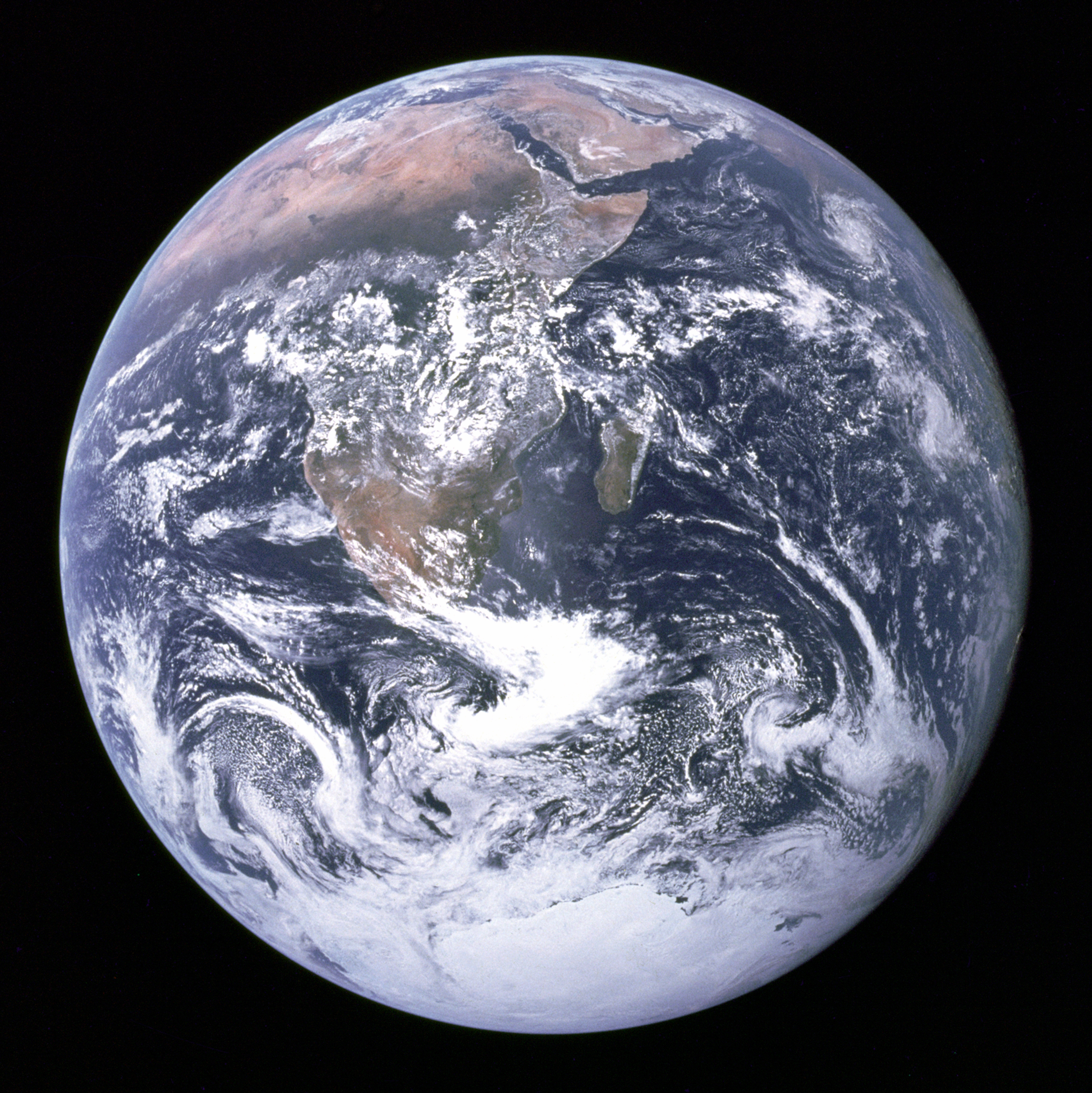
Image result for earth
  • We operate as if the Earth is a closed system because we derive our energy off of fossil fuels
  • We use matter for energy, hut in reality the sun is an open system in regard to energy as opposed to a closed system in regard to matter
  • Instead of deriving energy from the sun's energy, we derive it off of matter which is what causes pollution
  • Matter=The earth is a closed system
  • Energy=The earth is an open system
  • *Climate change is avoidable! We are not making it better, only worse
Must we change?? YES
Can we change?? This is a complicated change. 
How do we make change occur?
  • Atmosphere: The sphere of gases over our head
  • Troposphere: A thin layer where we live. This is where we actively live. 
  • Stratosphere: The gases that are trapped above the troposphere that allow for the transfer of gases through the earth's system but also provide a boundary that addresses the issue of temperature.
  • As gases like CO 2 increase, the boundary between space & the atmosphere thicken, this creates an insulating blanket causing heat on the earth
  • *CO 2 concentration increases as more of the outgoing infrared radiation is trapped-this is the cause of climate change* 
  • We are dumping 110 Million Tons of man made Global warming pollution into the Atmosphere every 24 hours
  • The Biggest Sources of Greenhouse Gases: Thawing permafrost, goal mining, coal plants, air transport, oil production, fertilization, industrial agriculture, industrial processes, landfills, land transport and fossil fuels
  • The largest source of global warming pollution of fossil fuels
  • Anomaly: Unexpected deviation from the norm
  • Exponential growth: Growth that doubles the amount at a fast rate
  • 2016 was the hottest year recorded in the world
  • Global ocean heat content has increased. This is dangerous because the heat kills the coral reefs and by killing the coral reefs we kill the animals that thrive off of them. This creates dead oceans.
  • Global ocean heat content increases and causes worse storms 
  • In 2015 there were three category 4 hurricanes at one time
  • Water Cycle: Precipitation, rain falls/water returns to the sea, evaporates from the earth
  • Rain bomb=  Rain storm/tornado with intense water that is flooding out 
  • The same extra heat that evaporates more water from the ocean, causing bigger downpours and floods pulls moisture even more quickly from the soil. causing longer and deeper droughts
  • Glacier melting-Ocean rise is tied up to the water running from the glaciers
Climate change "will likely lead to food and water shortages, pandemic disease, disputes over refugees and...natural disasters in regions across the globe."
"Climate change is a medical emergency."
  • We now risk losing up to 50% of all land-based species in this century
  • The #1 threat to the global economy is climate change. The cost of carbon: political instability, floods & mudslides, wildfires, drought, storm damage, ocean acidification, infrastructure loss, climate refugees, species extinction, melting glaciers, famine, water scarcity, ecosystem loss, our way of life

Sunday, September 3, 2017

And so the journey begins!


      And so the journey in ED 3120 begins!

From the start of this course I came to the realization that it would be like no other. Considering I am not very tech savy, I understand that this course is going to challenge me resulting in my ability to flourish with my learning through technology! Reflecting on myself as an individual, I am well aware that I have a lot left to learn about technology, but I am beyond excited to get started! As a future educator I understand that it is my job to keep my education of the changing world around us up to date in order to give my students the most recent source of education possible!

Click on the video link below to learn more about the Vision of Students today for a great resource!


In class this week I was able to get in touch with some amazing peers after a wonderful summer and we were able to explore the amazing features that google chrome and google drive have to offer. After discovering everything that Google features, I was amazed at the online world that I was not aware of and the different benefits that I was missing out on by not knowing that they all existed. For example I did not know that you could create different assessments through Google. That is amazing! I am so very excited to use all of the programs that we have learned just throughout the course of one week! Stay tuned for my reflection of the ED 3120 weeks to follow!